Dangerous Places of Nepal

This list is compiled and maintained regularly by the US State Department. It is sad to see Haiti still on the top of the list as this just reinforces the metaphorical comparison between hell and Haiti. The natural earthquake disaster set the country back and the people continue to need assistance. This is a place worth Nation Building.
I am certain that Israel would like to get off this list. It will take a concerted world wide effort to make it so.
It is shameful that America’s next door neighbor is high on this list. There can be no excuses for the USA permitting this.
It is surprising to see Saudi Arabia on the list. Can someone explain this?

The 10 most dangerous animals in the world

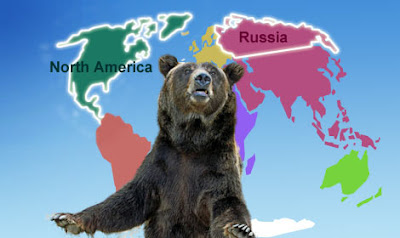
No 10: The bear
Forget gentle Ben - when a bear rears on its hind legs you know you're in trouble. Although bears have a fearsome reputation, you are statistically more likely to survive a bear attack than to perish, but that's small consolation to those who are faced with a bristling bear. With five attacks in Canada in 2005 alone, it seems that they're on the increase due to human destruction of, and encroachment on, bears' natural habitat
No 9: The shark
Sharks have a terrible reputation thanks to films such as Jaws and Deep Blue Sea, but it's one not entirely without cause. It seems that although great whites are often blamed for unprovoked attacks on humans, it is more likely to be down to those snappy bull sharks, who are very aggressive. Out of 360 species, only four are known killers: tiger, great white, oceanic whitetip and bull sharks. However, as we've seen with bears, although there are a high number of shark attacks, actual fatalities are fairly low.
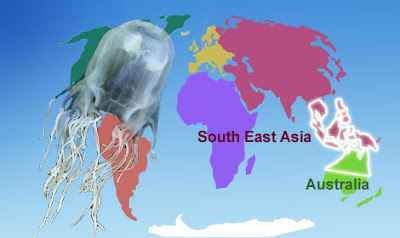
No 8: Jellyfish
The sting-masters of the sea, Jellyfish are usually passive drifters who use their tentacles to dredge up small prey. However, anyone who becomes entangled with a jellyfish will experience degrees of pain from a nasty nip to excruciating pain, depending on the species. The box jellyfish is one of the most venomous marine creatures in the world; a sting can kill a man within minutes and most fatalities occur following a brush with a toxic jelly like this.
No 7: The hippopotamus
At first glance, these wallowing river-horses appear to be bulky, lazy beasts and not the fearsome predators you would expect to have a habit of mauling humans. However, with gaping mouths that can open four feet wide and swinging sledgehammer heads, as well as the fact that they can outrun us on land, these highly aggressive animals have plenty of scope for destruction and are considered one of the most dangerous of African animals. No 6: The elephant
Despite their friendly and approachable image thanks to zoo feeding times, these herbivores kill an alarming amount of people every year. Elephants are unpredictable creatures, and have been known to kill zookeepers who have been with them for as long as 15 years. It is recorded that even the tamest of elephants can attack without warning, though it is thought that most elephants do not realise the harm they do with almost no effort.
No 5: The crocodile
Crocodiles are dreaded prehistoric creatures capable of wreaking a terrible punishment on puny human flesh. North American, Estuarine and Nile crocodiles are the most dangerous and probably kill more people yearly than figures show due to the isolated areas where attacks are likely to take place and distance from help. One meal will keep a crocodile sated for a good while, so they like to wait in the water for the perfect time to strike.
No 4: Big cats
These big cats certainly mean business. With destruction of their natural habitat and a decline in prey species, particularly concerning the tiger and North American mountain lion or cougar, attacks on humans are increasing. The African lion is the biggest and most feared of big cats, but holidaymakers on safari are 100 per cent safe viewing from a vehicle, unless they decide to take a closer look and step down. Mountain lions are found in many national parks and are responsible for six attacks a year in the US and Canada.
No 3: The scorpion
Highly deadly and twice as ugly, the scorpion is a nasty critter that is probably responsible for more deaths per year than recorded, due to the isolated places they hang out and probable lack of access to antivenin. However, out of an estimated 1,500 species of scorpion worldwide, only around 25 are regarded dangerous. No 2: The venomous snake
Though there are more than 2,000 species of snake, 450 of which are venomous, only 250 are capable of killing a man. That's little consolation to the thousands who meet a nasty death due to snake bites each year - it's usually members of local populations who bear the brunt as they live and work where snakes inhabit and usually wear no protective gear.
No 1: The mosquito
Yes, the humble mosquito. What we Brits regard as an annoying pest is actually the most dangerous creature on the planet, thanks to its ability to spread disease with alarming efficiency. Best known for spreading deadly malaria, mossies also spread elephantiasis, yellow fever, dengue fever and West Nile virus, which was recently introduced to the US and is now prevalent in all states.


Mountain Climbing Bad for the Brain

If you’ve ever fantasized about scaling Mount Everest, think again. A new study of professional mountain climbers shows that high-altitude climbing causes a subtle loss of brain cells and motor function.
Italian researchers used magnetic resonance imaging to look at the brains of nine world-class mountain climbers who had at least 10 years of experience, including expeditions to Mount Everest and K2. The climbers ranged in age from 31 to 52, with an average age of just under 38, and were used to climbing to altitudes of at least 4,000 meters (two-and-a-half miles, or over 13,000 feet) several times a year.
The scientists, who published their findings in the October issue of the European Journal of Neurology, compared the climbers’ M.R.I. brain scans with 19 age- and sex-matched healthy control subjects. A number of neuropsychological tests were also carried out to assess the climbers’ cognitive abilities, including memory and motor functions.
On scans, the climbers showed a reduction in both white and gray matter in various parts of the brain. Overall, the researchers found that the cognitive abilities that were most likely to be affected were the climbers’ executive function and memory.
Six of the nine climbers had lower than average scores on the Digit Symbol test, which measures executive functions. Three out of nine scored lower than average on memory tests, while four scored below average on a visual-motor function test. The study authors noted that the results “are most likely to be due to progressive, subtle brain insults caused by repeated high-altitude exposure.”
Other studies have shown links between brain problems and repeated exposure to extreme conditions. The British Journal of Sports Medicine reported in 2004 that scuba diving may have long-term negative effects on the brain, particularly when performed in extreme conditions, such as cold water, more than 100 dives per year, and diving below 40 meters.
And last year, researchers at New York University noted that high-altitude illness is a growing concern in sports medicine given the increasing popularity of extreme sports like high-altitude mountaineering, skiing and snowboarding. The report noted that about 20 percent of tourists to Colorado report acute mountain sickness, and complications arising from sports activities at high altitudes, such as the potentially fatal conditions of pulmonary and cerebral edema, are on the rise.

Global Warming

On Feb. 2, 2007, the United Nations scientific panel studying climate change declared that the evidence of a warming trend is "unequivocal," and that human activity has "very likely" been the driving force in that change over the last 50 years. The last report by the group, the Intergovernmental Panel on Climate Change, in 2001, had found that humanity had "likely" played a role.
The addition of that single word "very" did more than reflect mounting scientific evidence that the release of carbon dioxide and other heat-trapping gases from smokestacks, tailpipes and burning forests has played a central role in raising the average surface temperature of the earth by more than 1 degree Fahrenheit since 1900. It also added new momentum to a debate that now seems centered less over whether humans are warming the planet, but instead over what to do about it. In recent months, business groups have banded together to make unprecedented calls for federal regulation of greenhouse gases. The subject had a red-carpet moment when former Vice President Al Gore's documentary, "An Inconvenient Truth," was awarded an Oscar; and the Supreme Court made its first global warming-related decision, ruling 5 to 4 that the Environmental Protection Agency had not justified its position that it was not authorized to regulate carbon dioxide.

Forest Insects Articles

Thanks to the effort and imagination of Dick Fox, I am pleased to have this collection of papers made available to forest landowners and other people with a broad interest in forest health.
These articles cover a range of topics, some general and others fairly specific. My purpose has been to touch on items that I sense are of current interest, to use the FOREST OWNER column as an opportunity for alerting New York forest owners of potential problems and, at times, to do nothing more than try and make a forest owner's walk through the woods a bit more interesting. In regard to the latter, I think it important for forest owners to appreciate that insects play many beneficial roles in forest communities and to realize that all insects which feed on trees are not necessarily "pests."
In order to be a good steward one must understand the biological components of a forest. Insects are but one of the diverse groups of organisms that interact to determine the character of a woodlot. Unfortunately, on occasion they compete with humans for resources of mutual interest. This is the point at which they are no longer mere curiosities but become pests. The best control measure is prevention. If we understand an insect and the manner in which it interacts with the forest well enough, we often are able to adjust our forest management activities accordingly. I hope these articles will stimulate readers to learn more about the entomological aspects of forest health.

19 drug addicts escape from rehabilitation center in SW China


Four of 19 drug addicts who escaped froma compulsory rehabilitation center in southwest China's Guangxi Zhuang Autonomous Region are still at large, local police said on Tuesday. The 19 escaped from the Maling compulsory rehabilitation center on Friday afternoon, said an officer with the Hengxian County Public Security Bureau, who declined to give his name. Watchmen at the center, which had taken in about 100 drug addicts, found at 5 p.m. Friday that some had escaped by climbing out of a toilet window and then clambering over the barrier wall. Policemen caught one addict not far from the wall. The police seized 15 and are looking for the other four.

Cell phones dangerous for child pedestrians

Children who talk on cell phones while crossing streets are at a higher risk for injuries or death in a pedestrian accident, said psychologists at the University of Alabama at Birmingham (UAB) in a new study that will appear in the February issue of Pediatrics. "Cell phones clearly offer convenience and safeguards to families, but they also may pose risk," they said, "particularly when children attempt to multitask while conversing on the cell phone and have reduced cognitive capacity to devote to potentially dangerous activities such as crossing streets." For the study, researchers used a virtual reality software program and three screens to display an actual Birmingham-area crosswalk with simulated vehicles of different sizes traveling on the virtual street. The psychologists found that all of the children – even those who were experienced with talking on cell phones, crossing streets or rated as highly attentive – were more likely to exhibit risky behaviors when they crossed the virtual street while talking on a cell phone. Specifically, it took the children who were on a cell phone 20 percent longer to begin crossing the street, and they were 43 percent more likely to be hit by a vehicle or have a close call in the virtual environment. In addition, the children looked both ways 20 percent fewer times before crossing the street and gave themselves 8 percent less time to cross safely in front of oncoming traffic when they were on the cell phone. The study was published by UAB doctoral student Despina Stavrinos, M.S., under the direction of UAB psychologist David Schwebel, Ph.D. UAB graduate student Katherine Byington also contributed to the study. In this study, 77 children, aged 10-11, completed simulated street crossings in the virtual environment. They were asked to cross the virtual street six times without a cell phone and six times while talking on a cell phone with an unfamiliar research assistant. The UAB researchers asked the children to cross the virtual street when they believed it was safe. The children stepped from the "curb," onto a pad with a pressure switch electronically connected to a computer, and the system registered the precise moment they entered the "street." Cell phones are quickly becoming ubiquitous among American schoolchildren, the UAB psychologists wrote. "Commercial interests actively market cell phones for children, and marketing research firms estimate that 54 percent of children 8-12 will have cell phones by the end of [this year,] double the 2006 rate." Just as drivers should limit cell phone use while driving, pedestrians, and especially child pedestrians, should avoid using cell phone while crossing streets, the UAB researchers said. More research is needed to determine the impact that texting, listening to mp3 players and talking to peers has on children's ability cross streets safely, they said. The study was partially supported by the UAB Injury Control Research Center through a grant from the Centers for Disease Control and Prevention and a cooperative agreement with the Federal Highway Administration.

The real 'Colossal Cave'

The "Colossal Cave" mentioned by the game Adventure is a reference to an actual cave within the Mammoth Cave system in Kentucky. However, the game is not actually based on that cave, but is instead a remarkably faithful
Note: Although, as evidenced by the "Spelunker Today" magazines in the game, the word "spelunker" was once commonly used to denote cave explorers, it has fallen out of favor. The preferred term is now "caver," and that is the word used here. reproduction of nearby Bedquilt Cave.
A connecting passage from Bedquilt Cave to Colossal Cave was discovered in 1896. Both Bedquilt and Colossal Caves also have passages connecting to Mammoth Cave.
The game is filled with caver jargon and references to actual cave features, as Graham Nelson explains in his article
The Craft of Adventure:
"Like the real cave, the simulation was a map on about four levels of depth, rich in geology. A good example is the orange column which descends to the Orange River Rock room (where the bird lives): and the real column is indeed orange (of travertine, a beautiful mineral found in wet limestone).
"The game's language is loaded with references to caving, to 'domes' and 'crawls.' A 'slab room,' for instance, is a very old cave whose roof has begun to break away into sharp flakes which litter the floor in a crazy heap."
According to caver Mel Park:
"In our small circle, Willie Crowther is a famous, as was his wife then, cave explorer of the 60's and 70's when Colossal, Bedquilt, Salts, Crystal and the other caves under Flint Ridge, Kentucky were mapped together to become the longest cave in the world.
"In 1972 the Flint Ridge caves were joined to Mammoth Cave, over on the next ridge, in a series of difficult trips in low, half-water- filled passages
Willie Crowther's wife Pat was a key member of the small party of cavers that found the historic connection between the Mammoth and Flint Ridge caves.
It had long been speculated that the cave systems were connected, but nobody had yet found the crucial connecting passage, a very narrow tunnel that was later given the nickname "the tight squeeze."
Pat, being the thinnest member of the party, went through first. "Oh! It's very tight," she called, then saw the passage opening up into a much larger space. She happily added, "...but we have cave!"
This passageway may be commemorated in the Colossal Cave adventure as the narrow passage named "Tight Spot" that leads to the Plover Room. The game requires you to drop all carried objects (even the lamp!) before it will allow you through. under Houchin's Valley. That connection is still called the Everest of speleology
"The total known length of the Mammoth Cave System exceeds 350 miles and exploration is still going on."
Will Crowther's wife Patricia was a key member of the team that found this historic connection. A well-written and very engaging book that describes the cave explorations up to and
during this period is "The Longest Cave," by Roger Brucker and Richard Watson. The book has numerous references to both Will and Patricia Crowther, as well as a fascinating history of caving in the Flint Ridge region.
Mel Park continues by saying:
"Bedquilt was Willie's favorite part of the cave system. I still have a copy of his map of it. Computer types who grew up exploring ADVENTURE don't realize how accurately the game represents passages in Bedquilt Cave.
"Yes, there is a Hall of the Mountain King and a Two-Pit Room. The entrance is indeed a strong steel grate at the bottom of a twenty-foot depression.
Mel describes how caver Bev Schwartz got her start:
"On a survey trip to Bedquilt, a member of my party mentioned she would one day like to go on a trip to Colossal Cave, where she understood the game ADVENTURE was set.
"No, I said, the game is based on Bedquilt Cave and we are going there now. Excitement!
"Throughout the cave, she kept up a constant narrative, based on her encyclopedic knowledge of the game. In the Complex Room (renamed Swiss Cheese Room in Advent) she scrambled off in a direction I had never been.
"'I just had to see Witt's End,' she said upon returning. "It was exactly as I expected."
"When we finished with our work, I let her lead out, which she did flawlessly, again because she had memorized every move in the game. Believe me, the cave is a real maze, and this was an impressive accomplishment for a first-time visitor.
"...I felt that her knowledge of the cave was so good that in February, I had her be a guide for two survey parties that had work to do in upper and lower Bedquilt, respectively.


Skiing in Xinjiang

Description: Xinjiang occupies the most northwest part of China. This fertile land is affluent in natural resources and blessed in every aspect. The harvest autumn is cheering and penetrated with fruit fragrance. But the cold winter is also pleasing for it is the heaven of the ski lovers.The winter in Xinjiang is absolutely cold and the snow covers everywhere and everything. But the chilliness can not always keep people inside and the ironsides will find a way to enjoy the hibernal days as Urumqi is turned into a big ski resort by the heavy snow.In this page, we give you all the information about the SSS standard ski resorts near Urumqi.1. Silk Road International Ski Resort (0991-5963166/5963199): This resort is the biggest in northwest and one of the best ski resorts in China. It is located at PingXiLiang Village, ShuiXiGou Town where you can reach by direct bus from Urumqi International Grand Bazaar. The driving takes about 40 minutes and the return ticket is CNY15.00 per person.The altitude here is from 1700 meters to 2500 meters and the average temperature in winter is around minus 10 degrees. The resort is equipped with 6 trails, 2 sets of sightseeing cable cars to ancient forest, 5 sets of pulling ropeways, skateboard field, professional skating rink and many other entertainment facilities.Silk Road International Ski Resort is perfect for skilled skiers, but the novice can also have fun with the help of the professional coaches. The general expense is about CNY300.00 per person per day.2. BaiYun International Ski Resort (0991-3857028/3856400): BaiYun Ski Resort is about 42kms to the Urumqi and you can take bus from southern Passenger Station to ShuiXiGou to get there. The drop of the resort is only about 1000 meters with gently rolling hillsides and few cliffs.13 trails here are specially designed and functional distinguished for high speed, moderate speed, novices, elders and children. Besides the normal skiing activities, you can also ride horses or snowmobile and do parachute jump. This is a suitable ski resort if you have kids and the general expense is about CNY150.00 per person per day.3. XueLianShan Golf Lighted Ski Resort (0991-4683666/4681866): XueLianShan Ski Resort is suited in East WenQuan Road, ShuiMoGou Scenic Area. It is only 6kms to the city center and the closest ski resort. Public buses No. 34/104/106 all have stop there.The activities here are various. Ski jump, ski ring, ski practicing machine, snow Cart/tank/bike, speed skating, figure skating, fire balloon, snow sculpture, outdoor tennis, etc, everyone can find his/her own favorite thing to do here. The average expense is also about CNY150.00 per person per day, but please kindly note that self-brought instruments are not allowed here.4. WeiSiTe Happy Town Ski Resort (0991-48860055):This resort is also in East WenQuan Road, ShuiMoGou Scenic Area and is the terminal stop of public bus No. 104/106. It is fully equipped and the night lighted ski filed at every 19:00 is a highlight. If you come with a group of friends, it is better that everyone rent a different instrument so that you can exchange and experience each of it. The ski resorts all have doctors and paramedics, but please play safe.
Adventure is a word that brings to mind excitement, discovery and thoughts of places still to visit … good times with family and friends … a gateway to fun, relaxation and pleasure. This has always been the vision of the Adventure Company, who, by bringing together the finest materials, design and technology have created the very best inflatable and RIB boats available. Boats that not only look good, but which perform faultlessly … and go on performing, for year after year after year. For over 15 years, ADVENTURE LTD. has manufactured inflatable boats by high frequency welding method. Our long tradition and comprehensive know how, have given us a solid reputation as specialists in advanced technical solutions. Our products and processes are often first in the field of PVC welding. With years of experience and continuous research, ADVENTURE has developed a wide range of inflatable boats for various applications. Exclusive design, maximal reliability, large buoyancies tubes, not big weight, easy and fast assembly and disassembly, strong packaging are the principal features of the all ADVENTURE boats. All the elements and materials are designed to be extremely strong and reinforced, which is the best guaranty of long lifetime.
All boats are made by welding method, which meets to all the relevant requirements of the Recreational Craft Directive; (Directive 94/25/CE)

ADVENTURE boats are not afraid of overheating from the sun or excessive loads, and are designed for the most demanding boaters who require modularity, safety and seaworthiness from their boats, but never renounce to the prestige of having boat with a unique design and technical features. The boats are made to satisfy all the necessary requirements of safety on the water.We are only satisfied when our customers can buy products of the highest quality in the most cost efficient way possible.

ADVENTURE FILMS

Adventure Films are exciting stories, with new experiences or exotic locales. Adventure films are very similar to the action film genre, in that they are designed to provide an action-filled, energetic experience for the film viewer. Rather than the predominant emphasis on violence and fighting that is found in action films, however, the viewer of adventure films can live vicariously through the travels, conquests, explorations, creation of empires, struggles and situations that confront the main characters, actual historical figures or protagonists.
Adventure films were intended to appeal mainly to men, creating major male heroic stars through the years. These courageous, patriotic, or altruistic heroes often fought for their beliefs, struggled for freedom, or overcame injustice. Modern adventure films, some of which have been successful blockbusters, have crossed over and added resourceful action heroes (and oftentimes heroines).
Under the category of adventure films, we can include traditional swashbucklers, serialized films, and historical spectacles (similar to the
epics film genre), searches or expeditions for lost continents, "jungle" and "desert" epics, treasure hunts and quests, disaster films, and heroic journeys or searches for the unknown. Adventure films are often set in an historical period, and may include adapted stories of historical or literary adventure heroes (Robin Hood, Tarzan, and Zorro for example), kings, battles, rebellion, or piracy.
Adventure films share many elements with other genres - there are numerous examples of
sci-fi, fantasy, and war films with characteristics of this genre. Adventure films, in a broader context, could include boxing movies, motor racing films, and films adapted from literary novels (i.e., King Solomon's Mines (1937 and 1950), The Thief of Bagdad (1924 and 1940), The Three Musketeers (1916, 1921, 1933, 1935, 1948, 1973, and 1993), and The Prisoner of Zenda (1937, 1952)).
Directors and Stars of Classic Adventure Films:
Individual directors often associated with adventure films include Cecil B. DeMille, Henry Hathaway, Michael Curtiz, Howard Hawks, John Huston, David Lean, Zoltan Korda, and Raoul Walsh. The major adventure film stars through the years have included Douglas Fairbanks Sr. (and Jr.), Errol Flynn, Clark Gable, Johnny Weismuller, Tyrone Power, Gary Cooper, Stewart Granger, Burt Lancaster, Kirk Douglas, Charlton Heston, Alan Ladd, Sabu, Cornel Wilde, Sean Connery, John Wayne, and Harrison Ford. The female stars in these movies often were secondary figures, or romantic interests for the male

Serials:
The action/adventure film first became popular with weekly Saturday serials, running in installments that often had 'cliff-hanging' endings to entice viewers to return for the next show. Heroine Pearl White in the 20-episode The Perils of Pauline (1914) was the first major super-star of the silent serials. Besides Pearl White, there were other queens of the sound serials, including Kay Aldridge (as jungle Queen Nyoka in Nyoka and the Tigermen (1942)) and Linda Stirling (in the 12 part serial Zorro's Black Whip (1944) and as the "Tiger Woman" in another 12-episode serial, Perils of the Darkest Jungle (1944)).
Other action-adventure heros of B-picture adventure films included Flash Gordon, and Buck Rogers. 'Buster' Crabbe was the most famous of all the serial action heroes in the 1930s and 1940s, starring as both Flash Gordon and Buck Rogers. But there were others: Kane Richmond (as the "Spy Smasher," "The Shadow," and a star in the "Cliffhanger Serials" and the "Rin-Tin-Tin" adventure serial), Tom Tyler (as "Captain Marvel" with countless episodes, and "The Phantom of the West"), and Don "Red" Barry (as "Red Ryder"). [See this site's writeup of superheroes in

Welcome to Friends Adventure Homepage.

You arrived in home page of Friends Adventure Pvt. Ltd., mountaineering and trekking operator in Himalayan Kingdom of Nepal. Specilizing in adventerous activities, we operate package tour and trekking in Nepal, Tibet, Bhutan and Ladakh (india). Trekking, expedition, peak climing, jungle safari, white whater rafting, culture tours and special interest tours like canonning, honey hunting, bungy jumping are major activities. Nepal is destination for almost all above mention activities, where Bhutan and Ladakh are destination for culture tours and trekking.
Expedition, Pilgrimage tours, and tours is possible in Tibet. If you are planning to visit Himalaya, let your trip organize professionals team, like us. We are team of professional mountain guide, trekking guide and experienced organizer. It's been decades we are operating trip in Himalaya. We'll equipe your trip with experience crews, where you will have choice to eat food of your taste, enjoy beauty and share your talks with smiling staffs. We offer package program, please go through navigation menu and choose desired destination and package.
WE BELIEVE IN ECOTOURISM:
Massive mountains, rolling hills, abundant vegetation and diverse wildlife – it is little wonder that Nepal is a popular tourist destination and the ideal location for ecotourism. Ecotourism in Nepal is the main form of tourism in the country aside from the attractions of Kathmandu and other historical cities. From wildlife viewing, to wilderness camps, hiking vacations and white-water rafting, Nepal's ecotourism industry is flourishing.
In an area of 147 181 km² the landscape of Nepal changes from lowlands towards the highest mountains in the world, this is truly a land of extreme diversity. From tropical to arctic climates, Nepal's great diversity is a real draw card.
Despite its relatively small size, Nepal contains significant percentages of wildlife, such as 2,04 % of the world's flowering higher plants and 8,6 % of its birds. Nepal contains some 5833 species of gymnosperms and flowering plants with some 315 endemic species of higher plants. 847 bird species, 185 mammal species, 43 amphibian species, 100 reptile species, 656 butterfly species and 185 fresh water fish species have been identified in Nepal.
Nepal's combination of stunning natural environment and strong cultural heritage, make it a truly remarkable country for the development of ecotourism. In fact, ecotourism in Nepal tends to blend with adventure tourism with the magnificent mountain peeks attracting trekkers and mountaineers from around the world.
Various protected areas have been established in Nepal and play a vital role in ecotourism for the country. Over 18% of Nepal's land has been assigned as National Parks and protected areas, attracting more than 50% of Nepal's tourists to at least one of these areas during their stay in Nepal. This simply demonstrates the importance of such regions for ecotourism.
Many tour operators in Nepal offer a variety of contours throughout the natural areas of the country. Tours may last a few hours to a few days with accommodation. Certain tours may also incorporate cultural experiences for a truly rounded Nepalese experience.
So for the ultimate natural experience, try ecotourism in Nepal, it will leave you breathless

Helambu - Langtang Trekking

Langtang is the closest trekking region to Kathmandu, indeed the Langtang trek can be started in Kathmandu itself.From Sundarajil, just outside Kathmandu the fourteen day trek follows the Shiva pilgrim trail for 150 kilometres, over the Shiva Puri Ridge, over the Gosainkund Lekh via the Laurebina Pass at 4,700 metres. The Langtang Trek provides an opportunity to see the nearly whole Nepalese Himalayan mountain range from Annapurna in the west, to Makalu in the east. On the morning of the second day, this amazing view can be seen for the first time from the top of the Shiva Puri Ridge.
Trekking Grade: Easy
Glimpse of itinerary
Day 01: Arrival in Kathmandu airport and transfer to hotel.
Day 02: Full day valley sightseeing tour & preparation for trek.
Day 03: Drive to Sundarijal (1600m) & trek to Chisapani (2200m)
Day 04: Trek to Gul Bhanjyang (2150m)
Day 05: Trek to Magangot (3150m)
Day 06: Trek to Melamche Gaun (2600m)
Day 07: Trek to Tarkeghayang (2560m)
Day 08: Trek to Shermathang (2500m)
Day 09: Trek to Melamchepul Bazaar (828m)
Day 10: Drive back to Kathmandu and overnight at hotel.
Day 11: Free day in Kathmandu (Mountain flight on request).
Day 12: Transfer to international airport.

Moving Mountains

North America’s hut-to-hut ski circuits upgraded the classic European model—but left out the crowds.
The most spectacular of hut-to-hut trails, the Haute Route through the French and Swiss Alps, is also spectacularly crowded: Cross-country pilgrims share the circuit with about 200 other skiers each day, then bunk with them at night in huge dorms festooned with sopping garments. Thankfully, you don’t have to schlep all the way across the pond for a jaw-dropping Nordic tour. North America has built its own portfolio of equally impressive hut-to-huts in the years since WWII, when at least one veteran who had served as a special ski trooper in Europe returned home and later re-created the famous Alps circuits in his own backyard. The trend took hold from there, and the results, from steep Rocky Mountain runs to rolling North Woods loops, are more remote—and far less trodden—than the Alpine classics they mimic. And with what you save in airfare to Chamonix, you could make tracks to more than one.
1. Vermont
Indulge on the Green Mountains’ Red-Carpet Route

For skiers who like their accommodations extra cushy, the Catamount Trail through the Green Mountains reigns supreme: It was created to link plush cross-country ski inns and lodges. The 300-mile route runs from Readsboro, Vermont, to the Canadian border through a mix of parks and private land, so skiers pass through a pastiche of villages, farm valleys peppered with barns and Holsteins, and thick national forest. The 60-mile, four-night stretch between Sections 19 and 24 is an ideal primer. Start at Mad River Barn near Sugarbush Valley. From there, it’s down the flank of Camels Hump, in and out of groomed segments, to the resort town of Stowe. Along the way are generous doses of storybook New England: split-rail fences and old stone walls, country stores and great home cooking—about as much quaintness as anyone on two sticks can handle.
Lodge-to-Lodge Dogsled Vacations
A Wintergreen exclusive, these packages are suited for persons ages 5 to 85 and require no experience or gear. Accompanied by our guide-naturalists, you'll mush a team of our friendly Eskimo dogs on beautiful wilderness trails each day and enjoy great meals and cozy northwoods cabins each evening. Choose from:
GOOD: our Standard 4-night Dog Sledding Vacations (about 8 guests per trip, suited for pairs or individuals)BETTER: our Deluxe 4-night Dog Sledding Vacations (up to 6 guests, fine dining & lodging, private bathrooms)BEST: our "Star of the North" 4-night Dogsledding Vacations (limited to 4 guests, gourmet dinners, premier lodging), SHORTER: our 3-night Lodge-based Dogsledding Vacations (suited for pairs or individuals, specially priced for family groups)
Wintergreen Workshops These are lodge-to-lodge dogsled vacations with a twist. They include guest instructors who are professional outdoor photographers or writers who'll share their knowledge and help you build skills.
PHOTO WORKSHOP is a 5-night dogsled trip with Time-Life Photographer Layne KennedyPARENT-DAUGHTER WORKSHOPS are 4-night dog sled trips with creative writing tips by New Moon Magazine staff.
Dogsled Camping Trips
BEGINNING DOGSLED CAMPING: Our "Wintergreen Classics" are suited for complete novices. You'll spend your first night at Wintergreen Lodge learning dog sledding, snowshoeing, skiing, and winter camping skills. Then with our guides you'll enjoy a 4-day/3-night trek in the spectacular boundary wilderness capped with a final festive evening back at a lodge. Lots of learning and lots of fun.
ADVANCED DOGSLED & SKI CAMPING; These get you deeper into the wilderness by dogsled, ski and snowshoe and offer more intense skills instruction. These 6 to 8 night trips are suited for persons who've been on a Wintergreen Classic or who have previous camping and skiing experience. They are truly outstanding adventure experiences and many of them are led by director Paul Schurke. ARCTIC TRIPS involve new destinations each spring which have included the Russian Arctic, Hudson Bay, Greenland, Ellesmere Island, and even the North Pole. These trips are guided by Wintergreen Founder/Director Paul Schurke who ranks among the most experienced arctic dogsled guides in the world.
Day Trips & Group Trips
DAY TRIPS include half & full day dog mushing options for all ages
GROUP TRIPS: book your own private trip for family or friends at discounted rates

Yellowstone Horseback Riding

Take a vacation horseback riding in Yellowstone National Park with licensed Yellowstone outfitter Jett Hitt and his Yellowstone guides. Jett is a lifelong horseman and a seasoned Park guide. He is also the composer of Yellowstone for Violin and Orchestra.
Let us help you plan the perfect vacation horseback riding in the Yellowstone backcountry. If you are interested in a custom horseback riding trip to some remote area that you have been lon
ging to see, we will help you plan a
day ride or a Yellowstone pack trip. If you don't know where you would like to go, let us recommend some of our favorite pack trips in the Park. We also do fly fishing pack trips, including trips to Slough Creek and the Thorofare.
Whether you are interested in a day ride or a pack trip, we can help you put the perfect vacation together. Everything from where to stay to where to see wolves and bears, we can help you do it.
Look through our
photo album and see some of the breathtaking scenery that awaits you on a pack trip with Jett and his guides in the backcountry. Be sure to take a sample pack trip and see what a perfect vacation a pack trip can make. Check out our maps page to compare the routes and prices of our trips. Email us for more information about any trip. Be sure and read our Why Choose Us page before booking a pack trip with anyone.
Yellowstone Horseback Riding: Half and Full Day Rides
Our half and full day rides are designed to show you some of the fascinating features of Yellowstone. It is not just about horseback riding; it is about seeing Yellowstone. We plan our rides in the most picturesque parts of the park. A full description of our day rides can be found at
Yellowstone Horseback Riding.
Yellowstone Pack Trips
Our
Yellowstone pack trips are designed to show you the Park. We don't just take you out in the woods for a bit of camping. On our pack trips, you will see important features that contributed to the founding of Yellowstone National Park. A full description of many trips that we offer, including maps, can be found at Horse Pack Trips - Maps and Prices. We have also added a new complement of 3D Animated Maps of our Yellowstone pack trips.
Yellowstone National Park is located in Wyoming, Montana and Idaho. We operate out of Gardiner, Montana, the community at Yellowstone's northern gate. We offer horseback riding throughout the whole park. Our pack trips canvas the entire 1,200 miles of trails in the park, and most of our day rides take place in the northern portion. Check our
Calendar for availability.
Yellowstone Vacation
A Yellowstone vacation takes special planning, and we have put together a set of
tools to help you plan your Yellowstone vacation. Whether you are joining us on a pack trip, a day ride or whether you are just coming to Yellowstone, our Yellowstone Vacation page will help you make the most of your visit. It includes a Visitors Guide, a Camping Guide and everything that you will need to make your vacation complete.

Look Good, Feel Great, Enjoy YOUR Life!

Welcome to Absolute Health
We are very proud to announce that Charlotte has been accepted into ARCH (The Association & Register Of Colon Hydrotherapists) and is currently 1 of only 5 people listed on the ARCH website in the whole of Republic of Ireland.
Why is this so important?Well what it means to you is we are now under the umbrella of an official regulating body who ensure that we work to the highest standards of professional and personal conduct. Its not an easy association to get into as they have very strict rules and regulations. ARCH assess and approve practices where training takes place in the UK to ensure the best training procedures and practices are being adhered to. They also check out the facilities of their members to ensure they meet the criteria and are conforming to the many rules and regulations which they have in place. Charlotte was trained in one of the approved UK training schools and our clinic adheres to all of the regulations as covered by ARCH. She also has a Dip. in Anatomy / Physiology which is a pre-requisite just to be accepted on an ARCH approved course. The Dip. in Sports nutrition (which Charlotte also has) coupled with all of the above factors should leave you the client happy in the knowledge that you are in well trained and highly responsible hands and your Colonic Irrigation treatments will be carried out to the absolute highest standards. We are also covered by the
IMTA for our Massage Therapy. They have a strict code of ethics which we are bound to abide by. Check out the above sites and know you are in good hands. If you are training for a run or are just looking for a healthier outlook on life contact us for First Class Massage Therapy and
We are a Professional, home run, family company whose basic concept is to provide a warm relaxing experience for every individual who passes through our lives. We specialise in Colonic Irrigation and Massage Therapy.
I, Charlotte, have been working as a therapist for a number of years. I trained as a sports therapist initially. This covered anatomy, physiology, nutrition, Massage Therapy and personal training. A few years later I decided to add colonic hydrotherapy to my qualifications. I found many people suffered from toxic build up which inhibited their life style. Leaving them with poor concentration, poor sleep, and limited ability to progress with their goals, i.e. fitness, wellbeing, relaxation, work. Although Massage Therapy does help release toxins from muscles in the body, sometimes these do not get eliminated entirely from the body. Colonic Irrigation can take care of the rest. I spent some time under intensive training in the UK, studying colonics.
I combine all my training and experience to treat and advise my clients. This helps create a delicate balance with the mind and body enabling you to live life in a relaxed stress free manor leading to better results with your activities, work and day to day living.
We are working from home, allowing us to reduce our overheads, which in turn benefits you, cutting your costs. We have created a relaxed but very professional haven, where you will be given full attention and privacy. Our colonic irrigation equipment is state of the art and our treatment room is newly designed and taylor made for both colonic treatments and Massage Therapy. Although we have a very comfortable luxurious waiting area, waiting is something we strive to avoid for our clients.
Our bookings are arranged in such away as to allow complete anonymity and reduce waiting time to a minimum, eliminating the whole waiting room scenario. We have found our clients appreciate this approach.
A new feature of our site is the
Booking Availability page which allows you to view any appointments which may be suitable for your Colonic Irrigation or Massage treatments.
Each colonic irrigation and Massage Therapy session is tailored to your specific requirements. This is established by listening to and hearing what you have to say about how you feel.

African Travel, Safaris and Tours in South and East Africa

AFRICAN TRAVEL GATEWAY is a complete source of information on Africa, we are a broker of incoming tours and African safaris, specializing in tailor-made African Travel, adventure safaris and tours throughout South and East Africa. Our coverage of large parts of the African continent, including South Africa, Botswana, Namibia, Swaziland, Zimbabwe, Kenya, Tanzania and Zanzibar, combined with our knowledge of the regions and our African travel experience is what gives us the confidence to say that we can offer an educated choice when it comes to compiling clients' utmost African travel adventures!
African travel products featured on this site include over 400 pages of information on the following areas:
Accommodation in game lodges, hotels and guest houses
Planning, booking & implementing “tailor-made tours and safaris in Africa”
Portfolio of “special interest and adventure tours”
A selection of “recommended tours in South Africa & African safaris”
Whether you are looking for an African safari, golfing, car hire, flight information, hotel accommodation, guest house lodging, adventure tours or a carefully constructed combination of the above - then you've come to the right place! We plan, book and implement tailor-made African safaris and holidays of all sorts for all sorts of budgets. So whether you know what you want, or if you don't have a clue, ask us, we can help!

The Highest Garbage In The World

Mount Everest attracts thousands of visitors each year that leave thousands of kilos of all sorts of garbage without much of a fuss.
Famous mountains like Mount Everest, Aconcagua and others that in addition to their celebrity status are relatively easy to reach or at least, approach them, in contraposition to others that are harder to get to, like K2 or Cerro Torre, literally suffer the contamination caused by thousands of enthusiastic tourists and generally well equipped and qualified climbers that constantly try to reach the summit.
These particular developments are causing local contamination to an alarming degree because after each expedition the snow and rocks are left littered with valuable things like tents, oxygen bottles, climbing gear and equipment and even corpses, like in the case of the late climber Mallory, who seems to have been first up there, before Hillary, but died on his way down.
Since these elements don't constitute natural components of the area and are not easily degraded by nature, it becomes evident that tourists, sherpas and climbers are causing an unique sort of contamination.
Of course, climbing gear is necessary to get to the top of such mountains, but we should keep in mind that leaving such traces is bad for the local environment, no matter what and it would be foolish to assume that since it is "just" a bottle or tin can, a broken tent or a rope that we leave behind it won't have any impact. A lot of people think that one cigarette does nothing to the environment, but if you star adding up the "one" cigarette that they are having moment after moment, then things change. Any sort of non-degradable garbage has a negative effect in our world.
It would be ideal to have at least some sort of disposable and biodegradable gear that once used could be assimilated back to nature instead of littering the pristine ground of such high places. Plus, it would lessen the risks and workload of those in charge of cleansing the area periodically. It is ironic that people who love nature have become the main cause of contamination at the roof of the planet, plus, that they are far from self-sufficient there because they need others to take their garbage out of there, if it is ever taken; this should change, and we should lead by our example.